


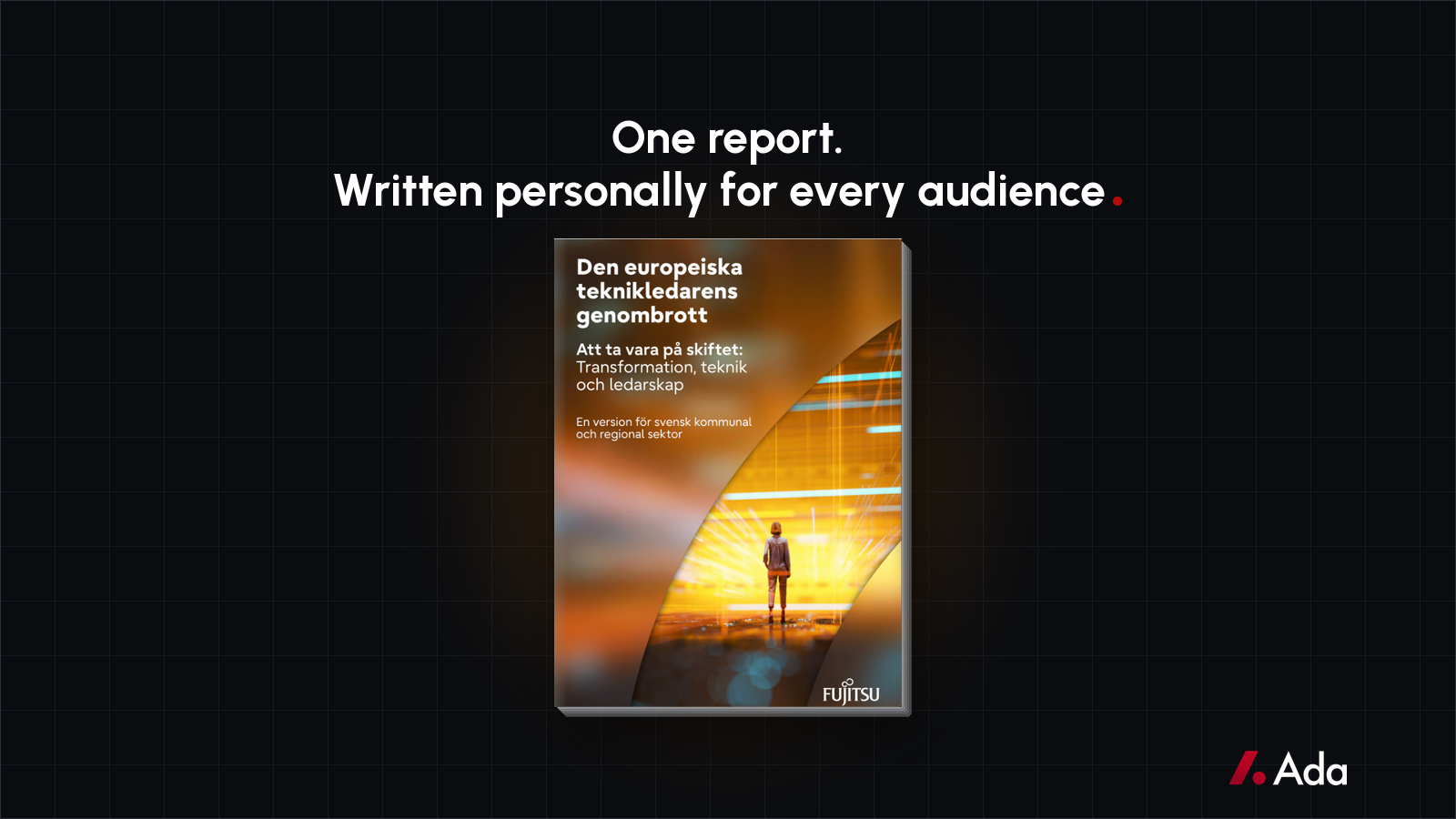
Fujitsu’s European Tech Leaders Report surveyed 1,750 IT and technology leaders across eight markets on disruption, AI, legacy modernisation, and leadership. It was strong research. It was also one document, written for one general reader.
That is the ABM problem. The research is good. The target list is right. But sending the same report to 109 accounts across the UK, France, Belgium, Sweden, Spain, and Finland means every reader gets findings written for someone else. The CTO dealing with legacy modernisation in manufacturing and the IT director navigating AI adoption in financial services are reading about the same topics, but care about them for completely different reasons. A general report asks them to do the work of finding what matters to them. Most won’t.
Fujitsu used Ada to change what each reader received.
- Ada profiled each target account: their industry pressures, strategic position, and how their stakeholders think and make decisions. Not firmographics. A genuine read of what would land with each person.
- Ada identified which findings in the research were relevant to each account and each individual within it, then wrote versions that led with those findings, framed in the language and priorities that reader would recognise.
- Over 30 versions produced across six European markets, each written natively in the reader’s language, not translated from an English master.
- Personalised executive summaries were produced for individual prospects and shared ahead of senior dinners, so the conversation started from something specific to that person’s world, not from a generic briefing pack.
One piece of research. Over 30 genuinely different arguments. Each one built from understanding of how that reader thinks, which findings matter to them, and what would give them a reason to act.
109 target accounts reached. €83M pipeline influenced. €10.8M in deals won.
The research didn’t change. The argument did, for every reader.
Bring a piece of research and a target list. See what Ada does with it.